Vancouver, BC, Canada
Atatuojun (ie. the data lama) is credited with originating the boxing style of the Tibetan monks, in the middle of the Ming Dynasty (1368-1644). This boxing art has it's stress laid on the techniques for attack and defence. When Atatuojun was cultivating himself in a remote mountainous area, he witnessed a white crane and ape fighting. He was very impressed with the way the crane evaded the huge ape's arm swings. He then modelled boxing principals, such as; eight fists, eight steps, eight kicks, eight catches, etc., after these two animals. Realising the true essence of the eight characters, striking at nothing but veins and arteries, rushing the hands out while keeping the body away. To officialize his new creation he pointed a finger to the sky and then to the ground and let out a shout thus the beginning of Lions Roar Style. Tibet Lama Kung Fu since it's creation has been selectively handed down from generation to generation. |
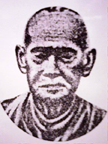
Elder MonkSing Long |
Tibet Lama Kung Fu was brought into southern China during the Ching dynasty (1644-1911) by a Tibetan monk named Sing Long. Sing Long arrived in Guangdong province, at which time he subdued the most powerful pirate, Cheung Po Jai. After this he became very close with Cheung Po Jai (master and disciple). Later Cheung Po Jai surrendered to the Ching rulers. Sing Long being offended withdrew himself from society, to the Hing Yun monastery (Blessing Cloud Temple) on Ding Wu mountain in Zhaoqing, to live in seclusion. After the death of the presiding monk Sing Long became head of the temple. Wong Ping, known as the "One Foot Bronze Man", saw how superior Sing Long's martial arts skills were, and became good friends. Wong then sent his only son (Wong Yan Lam) to become a monk under the great Sing Long, where he mastered the fighting art of Tibet Lama Kung Fu. |
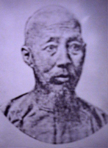
Ten Tigers of GuangdongWong Yan Lam |
Wong Yan Lam travelled to Shensi province and began working with an armed escort bureau leading the life of a travelling swordsman. This gave Lama kung fu its other name Hop Gar ("chivalrous knight style"). Wong eventually returned home to Guangdong where he built a raised platform (lei toi) used for challenge fighting among various martial arts styles. There he fought over 150 other martial artist and was never defeated. Shortly afterwards he was elected to be the leader of the Ten Tigers of Guangdong, by the other nine members of that elite group. He taught several students such as Wong Hon Wing, Poon Ho, Yuen Woon, and Yi Lo Jing. Later Wong Yan Lam was introduced to a young boy named Choi Yee Gung whom he accepted as his disciple at eleven years old. Choi Yee Gung learned so diligently that Wong Yan Lam devoted himself to passing on all the "internal and external skills" of Tibet Lama Kung Fu. |
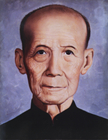
GrandmasterChoi Yee Gung |
After eight years of painstaking training, Choi Yee Gung mastered all the skills of the Tibet Lama style thus becoming the grandmaster. He was from Chung Shan County in Guangdong Province. Master Choi was known for his straight forward disposition and humanitarian generosity in aiding needy people. It was during this time Choi supported the Anti-Ching revolution, following Dr. Sun Yat Sin serving as his bodyguard. This journey took them south to Siam and east to Japan. Some time later, he returned to Guangdong China and later moved to Hong Kong. At this time he decided to take on some disciples to carry on the style. The two most noteworthy were Chan Kwun-Ng and Kung Yuet Gei, whose reputations were well known and respected among martial arts circles. Eventually Master Choi accepeted Lo Wai-Keung to be his closing door student and passed on the complete style to Master Lo. |
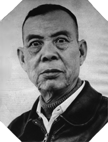
SifuChan Kwan-Ng |
Chan Kwan-Ng learned the martial arts from a number of different schools; Northern Shaolin Style, Pakua , and Choy Lee Fut Style, etc.. He later joined the Tibetan Lama School of which he mastered with great enthusiasm. Chan specialised in traditional weapons. |
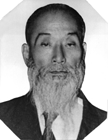
SifuKung Yuet Gei |
Kung Yuet Gei originally learned from Tibetan White Crane grandmaster Ng Shiao Chung. Ng Shiao Chung later introduced Kung Yuet Gei to grandmaster Choi Yee Gung of Tibet Lama Style. Where he furthered his pursuit of the two similar boxing styles. Kung Yuet Gei managed to learn the whole system from Choi Yee Gung. After Choi's death Kung Yuet Gei inherited the duty to pass on the skills to the next generation of students. |
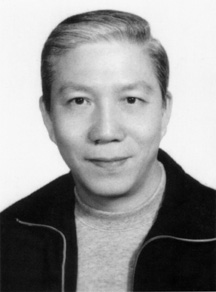
SifuLo Wai-Keung |
Master Lo Wai-Keung was born in Hong Kong. While being a teenager, he practised the Southern Chinese Martial Arts such as Hung Style Boxing, Choy Lee Fat Style Boxing, Dragon Style Boxing and Yau Kung (Supple Strength) Style Boxing... etc., with various masters. This layed down a good foundation in the martial arts. He subsequently got acquainted with Master Chan Kwan-Ng and was deeply impressed by the marvel of the Lama Style Martial Art. Master Lo then learned from Master Chan for some time. Eventually, Master Chan introduced him to Grand Master Choy Yee Gung, who then decided to take Master Lo as his last disciple because of his explicit talent and dedication in learning Lama Kung Fu. Master Lo learned from Master Chan and Master Choy for about 15 years in total, from the mid 1950's until the 1970's when both died respectively. As Master Lo has spent many years learning all the Lama Style from Master Choy (both external and internal) to a very proficient degree, he is the inheritor of the Lama Martial Art in contemporary times. Master Lo has been teaching Lama Martial Arts for more than 40 years in sports associations, stunt man training classes for famous Hong Kong film making companys, and in private. His deciples are located in Hong Kong, Austrailia, Canada, and U.S.A. Master Lo has taken on some of the higher students of the Vancouver Tibet Lama Kung Fu Club as his deciples a few years after Master Jay's passing away. Among these are Parry Fung, Vernon Shewchuk, and Wilson Lee. Master Lo is also a highly qualified bone setter and an international referee for Chinese Martial Art Competitions. |
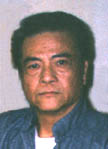
SifuJay Bok Tong |
Master Tony (Bok Tong) Jay is the founder and head of Tibet Lama Kung Fu in Vancouver, B.C., Canada. Tony started his martial art discipline in Hong Kong in 1948. As fate would have it, he happened to meet Master Kung Yuet Gei who was sitting outside of his medicine shop on a hot humid day cooling himself. Jay's health at that time was very poor therefore Master Kung discussed various medicines and methods to improve his condition. One particular method recommended by Master Kung to Jay was to take up martial arts. It was only then he realised that the person in front of him was a qualified kung fu master of the Tibetan Lama Style. Jay was 21 years old at the time when he was formally accepted as a disciple and for the next four years trained extremely hard under the direct instruction of Kung Yuet Gei. During this time, while Master Jay was waiting for his immigration papers to be processed for Canada, he was receiving private lessons from Kung in the morning then joining the regular class at night. His master forbade him to disclose any of the special instructions to any of his fellow students. Master Kung recognised Jay's dedication and talents therefore no effort was spared by the old man in his teaching of Jay. Master Kung's dream was for Jay to take the style to Canada and teach it to the next generation. Throughout the 1960's Jay often went back to Hong Kong to be with his beloved master to further his knowledge into this unique style. He was taught "The Lions Roar" soft internal fist form as a result of loyalty and devotion to the style by Master Kung Yuet Gei personally. Jay's Master passed away quietly in June of 1974 two weeks before he was to board a plane to go and see him. Master Jay took the news quite hard and carried a picture of his beloved mentor in his wallet at all times. Master Jay was also an accomplished Tai Chi Master. He studied Ng Style Tai Chi under Masters Cheng Tin Hung and Choy Sheng Win. Master Jay passed away in June of 2008 of diabetic complications. |
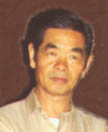
SifuShek Hon Fong |
Peter (Shek Hon) Fong is the fellow student of Tony Jay. Both he and Tony Jay studied with Master Kung Yuet Gei of the Tibetan Lama Style in Hong Kong. Prior to learning from Master Kung, Fong was also taught by another celebrated Tibetan Lama Master Chan Kwun-Ng who was an expert in fast light footwork and heavy punches. Peter Fong's specialty was weapon forms, mainly "Bil Lung Cheong" (thrusting dragon red tassel spear form). Peter resided in Vancouver, BC., Canada and taught Tibet Lama Kung Fu syle there until he passed away in 2014. |
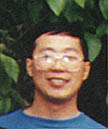
SifuTony Kam |
Tony Kam has studied kung fu for over thirty years. Of which twenty years he practised lion dance and Tibet Lama Kung Fu under Sifu Bok Tong Jay. In 1986, at the invitation of the Chinese Government, he was chosen to represent Canada in Tinan China for a special workshop with top Chinese Wushu Masters. He received certification as an internationally recognised martial arts instructor. Tony has served as the presedent of Western Canada Chinese Martial Arts Association. |
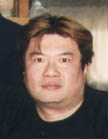
SifuRandy Sue |
Randy Sue started training in Tibet Lama Kung Fu in 1980 under Sifu Bok Tong Jay. During the past years he has received invaluable training from Sifu Bok Tong Jay & Sifu Shek Hon Fong, expanding his knowledge into this unique art. |
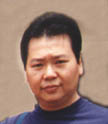
SifuHenry Kam |
Henry Kam began training in Chinese Martial Arts and lion dance in 1969. He trained in five different styles before studying Tibet Lama Kung Fu under Sifu Bok tong Jay in 1980. |
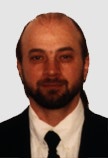
SifuVern Shewchuk |
Vernon Shewchuk originally started training with Shek Hon Fong in 1985. The Tibet Lama Kung Fu Club was in the same building where he was rehearsing with a rock and roll band. Vern was recovering from a bout of pneumonia and was looking for a way to get his energy back. Out of curiosity he went to check out the club and met Sifu Fong, and was so intrigued by the art he started taking private lessons immediately. One year later Sifu Fong introduced him to Sifu Bok Tong Jay. After training with Sifu Jay a few years Vern became one of Master Jay's disciples . Since then he has received private as well as group instruction in his pursuit of earning the Tibet Lama Style. He also trained with Sifu Jay learning the art of Ng Style Tai Chi. A few years after Master Jays passing away he has become a deciple of Master Lo Wai-Keung. Vern's excellence in Kung Fu has gained him a membership in the Western Canada Martial Arts Association of which he has held the position of Vice Chairman. |
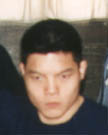
SifuAnthony Jay |
Anthony Jay is the grandson of Sifu Tony Jay. He began learning from his grandfather when he was six years old. Martial arts have always been a large part of his life and he believes in constantly training to continue to better himself as a martial artist and as an individual in general. |
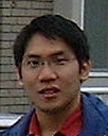
SifuParry Fung |
Parry Fung has been a kung fu enthusiast for his entire life. He started his journey of martial arts since the age of eight with Master Tony Jay after immigrating to Canada in 1994. Parry soon became one of Master Jay's disciples and studied Tibet Lama style. He fell in love with this scientific and systematic style of the martial arts, working his way from external to internal principals. Throughout the years, he analyzed and decomposed lama kung fu into details by using his expertise in biomedical engineering. He also learned Ng Style Tai Chi hand and weapon form and push hand from Master Jay. Parry is now a diciple of Sifu Lo Wai-Keung, and has a Lama club in Vancouver's china town where he teaches the lama style. |